
From Flower Plot to Dried Wreath: The Flowers I’ve Been Saving All Summer
It might only just be the beginning of autumn, but I’ve actually been preparing for wreath season for months.
All through the summer, alongside cutting flowers for the flower stand, The Coffee Girl flowers and my wedding flowers, I’ve also been quietly putting things aside. Flowers have been cut and hung from the roof of my garage, grasses have been gathered, seedheads have been left to develop and interesting pods have been saved rather than ending up on the compost heap.
They’re all destined for my dried flower wreaths, which I’ll be making here in Bradford on Avon this autumn and winter.
And by now, my garage is looking rather full.
Choosing flowers that are meant to look dried
I’m quite particular about which flowers I dry.
There are lots of flowers that can technically be dried, but that doesn’t necessarily mean I like them once they are. Roses and dahlias, for example, can be preserved, but personally I often think they look a little too much like dead flowers rather than dried flowers.
Instead, I’m drawn to flowers that already have a slightly papery, textural quality while they’re growing.
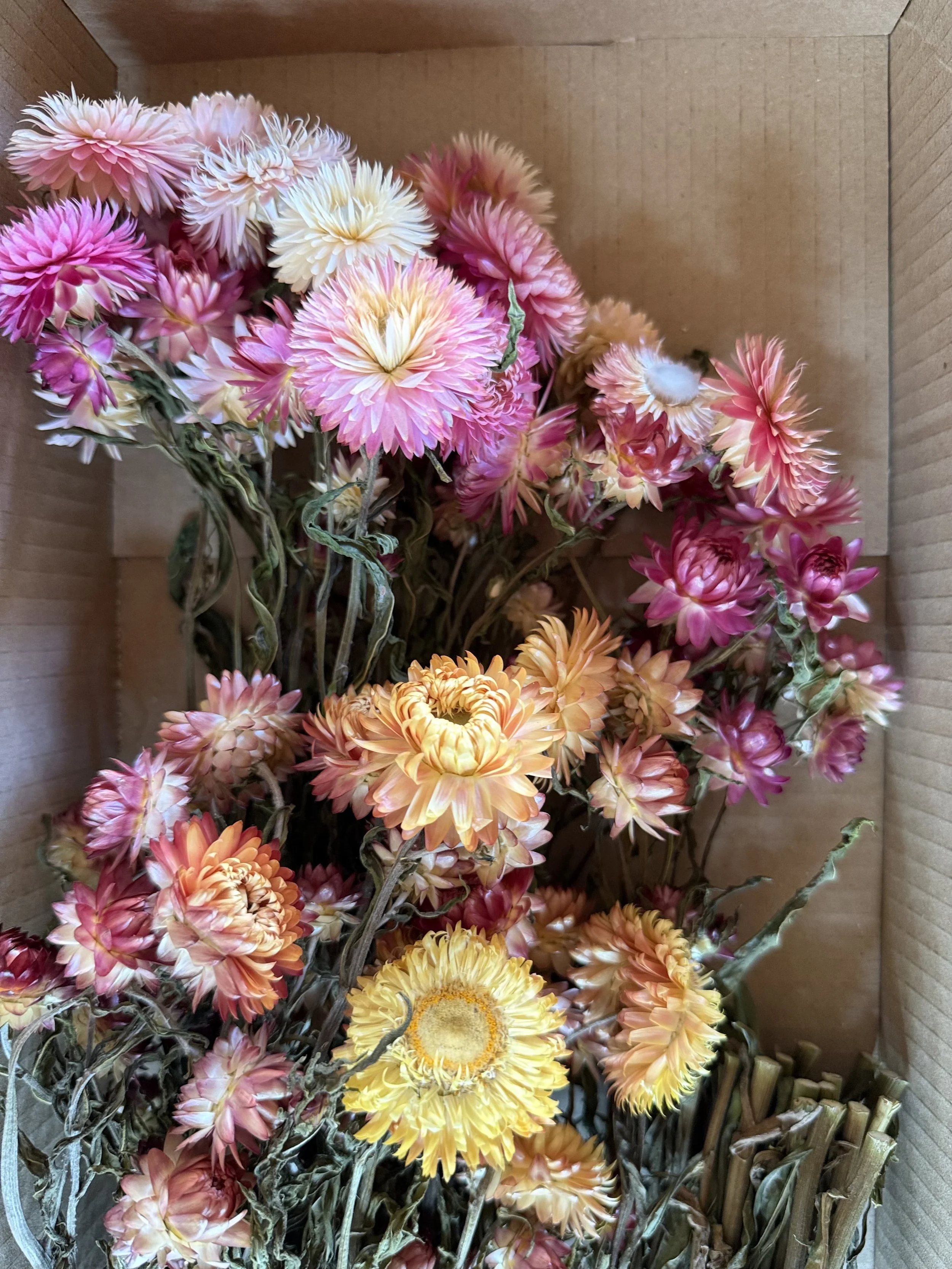
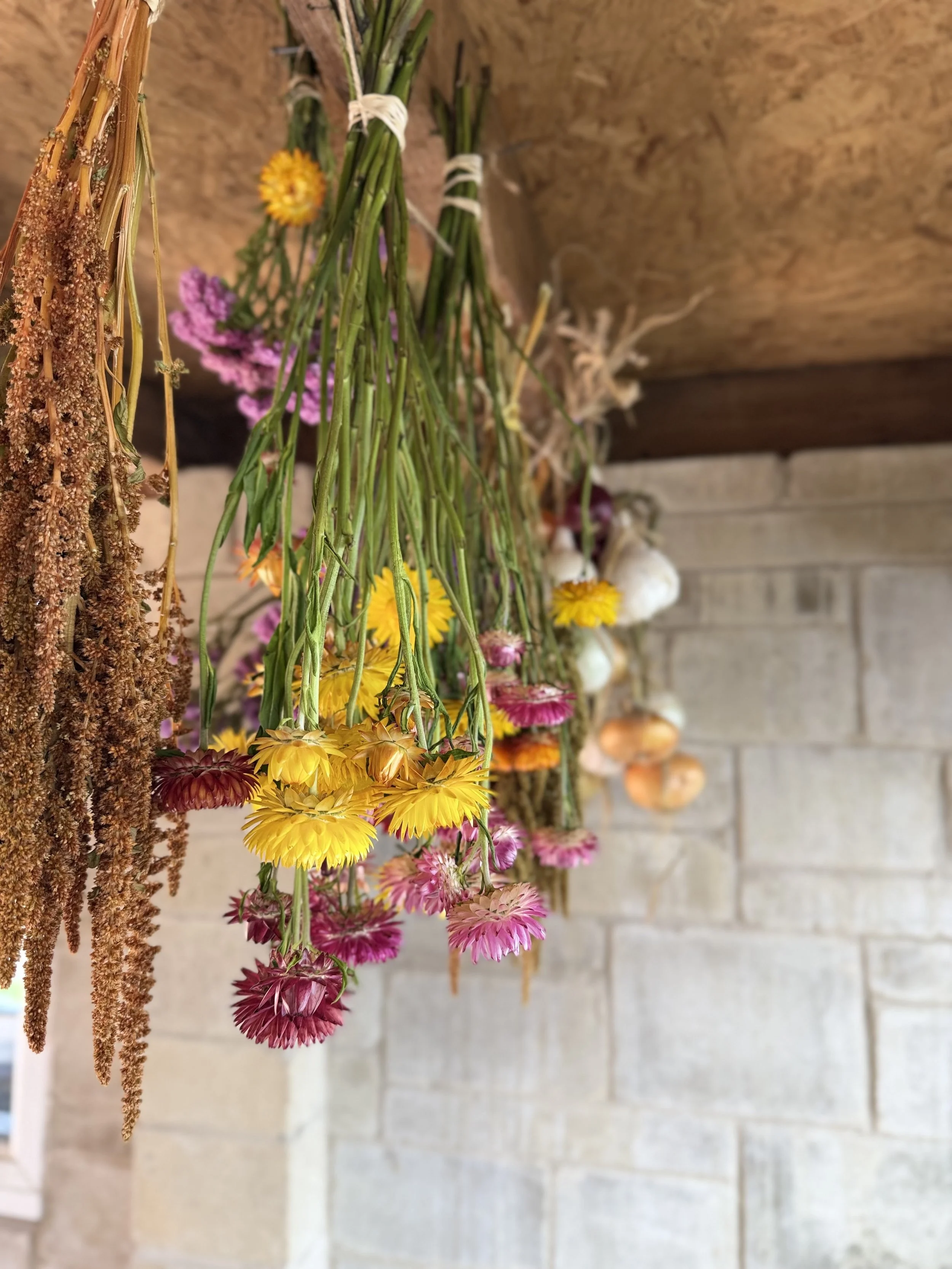
Strawflowers are probably the perfect example. Even when they’re freshly cut, their petals have that crisp, papery feel, so drying them seems to preserve their character rather than completely changing it.
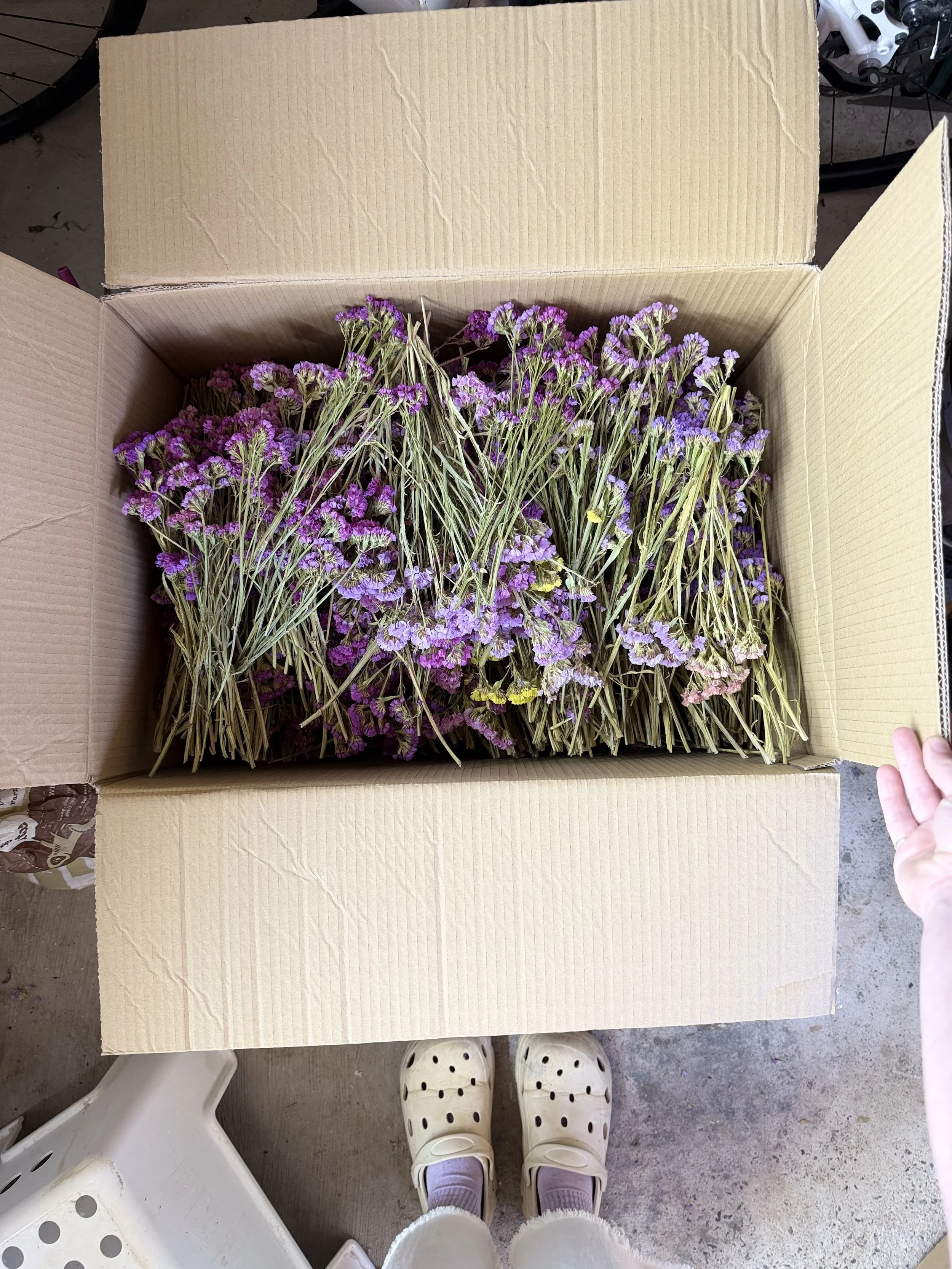
Limonium is another favourite. It dries beautifully and keeps both its shape and colour, which makes it particularly useful for wreath making.
I grew what was supposed to be a lovely mixture of apricot, pink and white limonium this year, because those colours work beautifully with the softer palette of my fresh bouquets.
The seed mix had other ideas.
I ended up with considerably more purple than planned. So, while that wasn't quite what I had envisaged for my summer bouquets, the upside is that I now have A LOT of dried limonium stored away for autumn and winter wreath making.
Sometimes you just have to work with what the flower plot gives you.
Flowers, grasses and seedheads from the plot
It isn’t only flowers that I’ve been saving.
Some of my favourite wreath ingredients are actually the things that appear once a flower has finished flowering.
Wild carrot is a brilliant example. If you leave the flower heads to go to seed, they curl inwards and form these beautiful little structures that look almost like birds' nests. They add a completely different shape and texture to a wreath.
I’ve also been drying achillea, rudbeckia, grasses and all sorts of seed pods from the plot.
The grasses in particular give me those lovely wispy, delicate textures that I want in my wreaths. Rather than every part of the wreath being a recognisable flower, I want there to be lots to discover when you look closely: seedheads, pods, papery petals, feathery grasses and interesting shapes.
I’ve also gathered a small amount of material away from the flower plot, including bracken, fern leaves and teasels.
It means the finished wreaths will be a mixture of things I’ve deliberately grown and things I’ve gathered because I happened to notice something beautiful.
How I dry flowers for my wreaths
My drying process is actually incredibly simple.
I try to harvest anything destined for drying on a dry day. Starting with flowers that are already damp from rain is asking for trouble; all that trapped moisture makes mould much more likely.
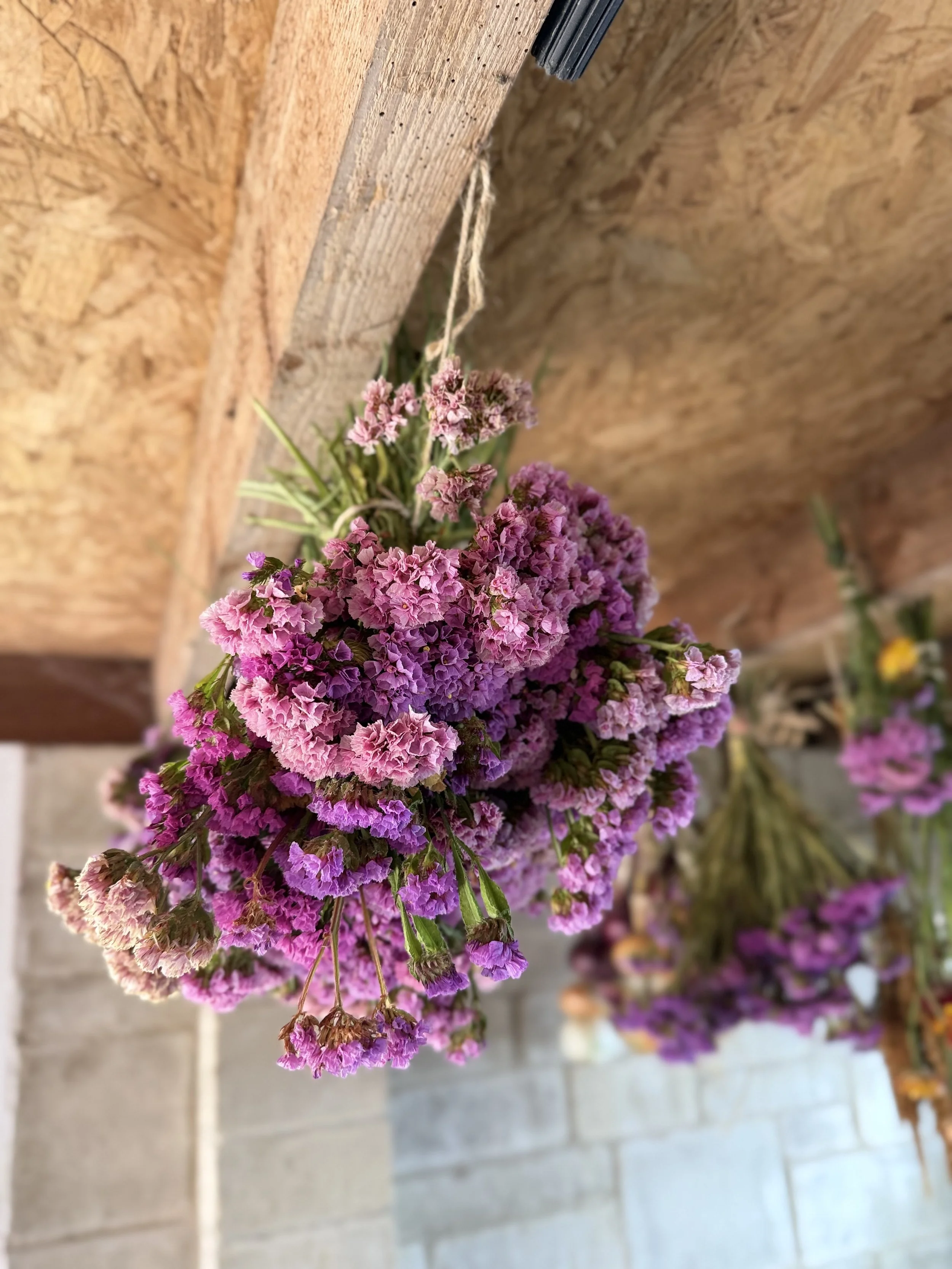
Once cut, I gather the stems into small bunches and hang them upside down from the roof of my garage.
And then I leave them alone.
It generally takes a couple of weeks for everything to dry completely, although it varies depending on the material and the weather. Once I'm happy that there's no moisture left, I carefully pack everything into cardboard boxes until I'm ready to use it.
The hot, dry weather we've had this summer has actually been fantastic for this. I've had virtually no problems with mould.
If anything, I've had the opposite problem.
One particularly enthusiastic bunch of limonium stayed hanging in the garage a little too long and became so brittle that it was almost impossible to handle. That one went on the compost heap.
Apparently there is such a thing as too dry.
Even the wreath bases have been carefully chosen
I wanted the base of the wreath to feel like part of the whole thing too, rather than simply buying a mass-produced base and covering it up.
So I'll be weaving the wreath bases myself from willow.
I don't currently have enough growing space to produce my own willow as well as all my flowers, so I've sourced it from Musgrove Willows in Somerset.
Choosing somewhere relatively local was important to me, but I also really liked the way they grow and process their willow. Musgrove Willows use traditional growing and processing methods, harvest rainwater and make use of their willow offcuts rather than treating them as waste. They also manage their land with wildlife in mind, including areas designated as a Site of Special Scientific Interest.
It felt like the right material to use alongside flowers that I've spent months growing and drying myself.
A wreath that starts in summer
I think that's what I love most about making these wreaths.
A dried flower wreath isn't something I suddenly decide to make in October and order all the ingredients for.
Its story starts months earlier.
It's in the strawflowers growing on the plot in summer. It's noticing that a wild carrot seedhead has curled into the perfect little bird's nest. It's cutting grasses at just the right stage. It's bunches of limonium hanging from the garage ceiling and cardboard boxes gradually filling up with things that would otherwise have been forgotten once summer was over.
Then, when the fresh flower season begins to wind down here in Wiltshire, I get to bring all of those things back out again.
The flowers I grew during spring and summer get another season.
Only this time, instead of being gathered into bouquets, they'll be woven together into wreaths designed to last throughout autumn, winter and beyond.