
Can British Flowers Survive a Heatwave?
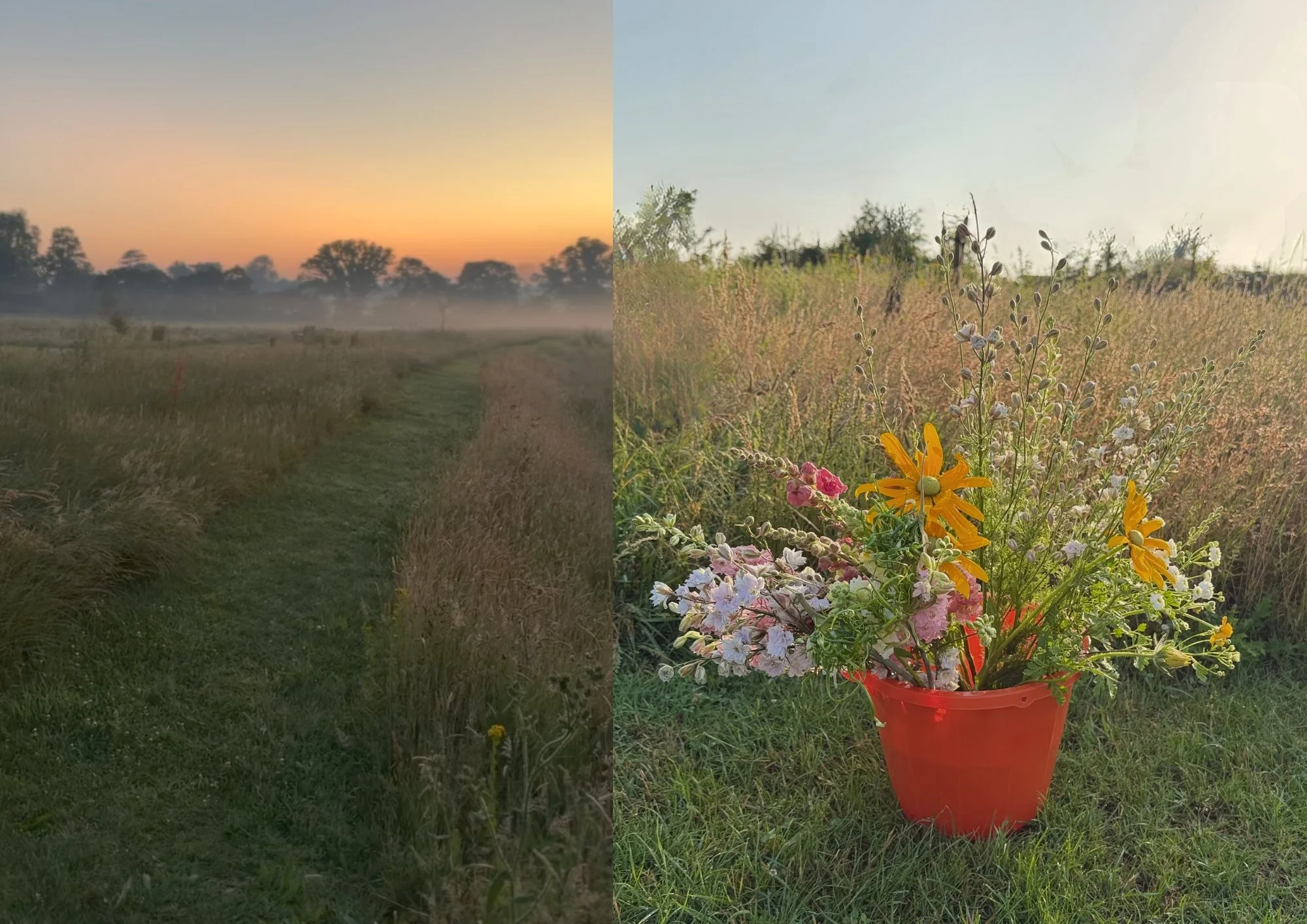
Being up at 4am to water and harvest through the heatwave has its perks - just look at that view!
When people imagine British flower farms, they often picture gentle sunshine, a little summer rain and fields full of beautiful blooms swaying in the breeze.
The reality is often far less predictable.
One week we're pulling on waterproofs, the next we're desperately searching for sun cream, and occasionally we're faced with something even more challenging: a heatwave.
This summer has brought some exceptionally high temperatures to much of the UK, and like many flower growers, I've spent plenty of time watching the weather forecast, adjusting watering schedules and checking on the flowers throughout the day. It made me wonder how many people have ever stopped to think about what happens to cut flowers before they reach the vase when the weather becomes extreme.
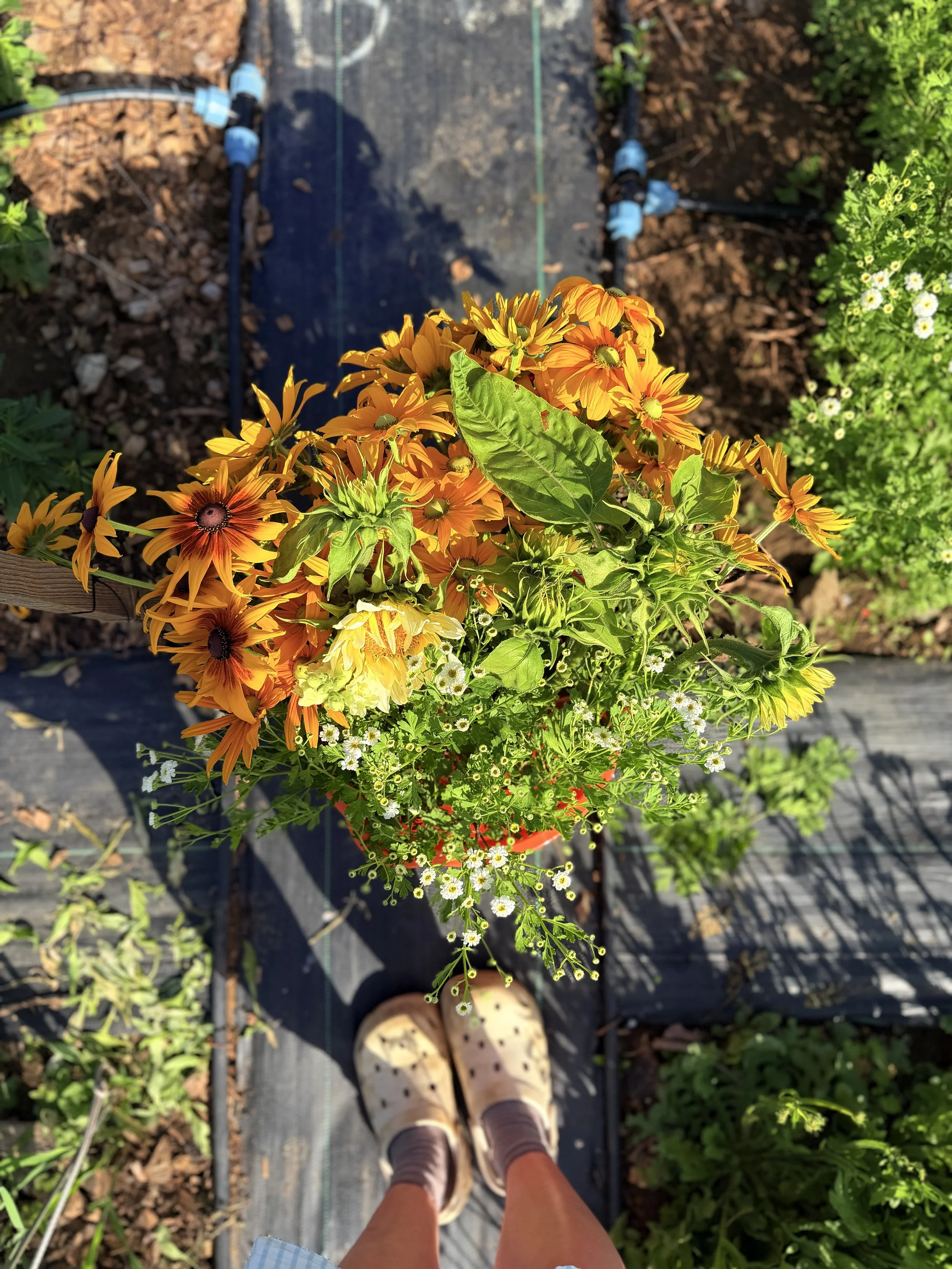
Flowers feel the heat too
Just like us, plants become stressed when temperatures climb.
During very hot weather, flowers lose water through their leaves much faster than normal. If they can't replace that water quickly enough through their roots, they begin to wilt, stems become shorter, and flowering can slow down altogether.
Some flowers even produce smaller blooms because they're putting all of their energy into simply staying alive.
This is why you'll often hear gardeners talk about plants being "under stress" during a heatwave. They're not just thirsty – they're working incredibly hard to cope with the conditions.
Watering isn't as simple as using more water
One of the biggest misconceptions is that growing flowers during a heatwave simply means turning the hosepipe on for longer.
In reality, successful watering is all about efficiency.
Watering in the middle of a hot afternoon means much of the moisture evaporates before it has a chance to reach the roots. Instead, flower growers prefer to water very early in the morning or overnight, allowing the soil to soak up every precious drop before the sun returns.
This year I've been installing drip irrigation—a system of pipes that slowly releases water directly at the base of each plant. Rather than spraying water over the whole bed, it delivers moisture exactly where it's needed most: the roots.
One of the biggest lessons I've learnt is that you can't wait until the day of the heatwave to react.
If temperatures in the mid-thirties are forecast, my preparations begin several days in advance. I want the flowers to go into the hot weather already well hydrated rather than trying to rescue stressed plants afterwards.
That often means running the irrigation overnight, when temperatures are much cooler and almost every drop of water has the chance to soak deep into the soil instead of evaporating in the heat of the day.
It might seem strange to water while everyone is asleep, but it's one of the most effective ways of helping the flowers cope with extreme temperatures.
Healthy soil is the secret
People often assume flowers simply need more water.
In reality, healthy soil is just as important.
Over the past few years I've worked hard to improve the soil by adding organic matter, such as compost and other natural materials that break down over time and help the soil hold onto water like a sponge.
That means the flowers aren't just relying on today's watering—they're drawing on moisture that's already stored beneath the surface.
Clay soil sometimes gets a bad reputation, but one of its greatest strengths is its ability to hold onto water. By continually improving the organic matter within it, I'm helping create conditions where the flowers can keep drawing on that moisture during prolonged hot spells.
It's one of those jobs that nobody sees, but it makes an enormous difference during long periods of hot, dry weather.
Heatwaves don't always arrive alone
One thing I've learnt over the years is that it's not always the heat itself that's the biggest challenge.
This particular heatwave was forecast to begin with an evening of thunderstorms, torrential rain, strong winds and even the risk of lightning. If I'm honest, I wasn't entirely convinced the forecast would come true—but it certainly did.
The timing couldn't have been much worse.
Later that week I had a wedding to prepare for, and my plan had been to harvest many of the flowers that evening once the temperature had dropped, giving them plenty of time to drink deeply in fresh water and recover after being picked before they were arranged.
Instead, I found myself watching the radar and wondering whether I'd have enough time before the storm arrived.
Thankfully, one of the best decisions I've made on the flower plot was investing in support netting—a grid of string stretched horizontally across the beds that acts rather like an invisible scaffold, supporting the flower stems as they grow.
Much of the crop stayed upright despite the strong winds because the stems were held securely in place. Without it, many more flowers would almost certainly have snapped or been flattened.
Even so, the storm still left its mark.
Some flowers were bruised or damaged by the driving rain and had to be composted rather than used. It's always disappointing, but I'd much rather remove a damaged stem than include anything that isn't up to the standard I'd want for a customer.
There was another problem too—one that most people probably wouldn't think about.
After a day of blazing sunshine, the top few millimetres of the soil had completely dried out. When the heavy rain finally arrived, it splashed tiny particles of soil up onto the flowers, leaving many stems coated in mud and grit. Before they could even begin drinking in fresh water and recovering from being picked, I had to carefully wash each stem so they were clean enough for the wedding later that week.
It's one of those behind-the-scenes jobs that nobody ever sees, but it's all part of making sure every bouquet and every wedding arrangement leaves looking exactly as it should, whatever the British weather decides to throw at us.
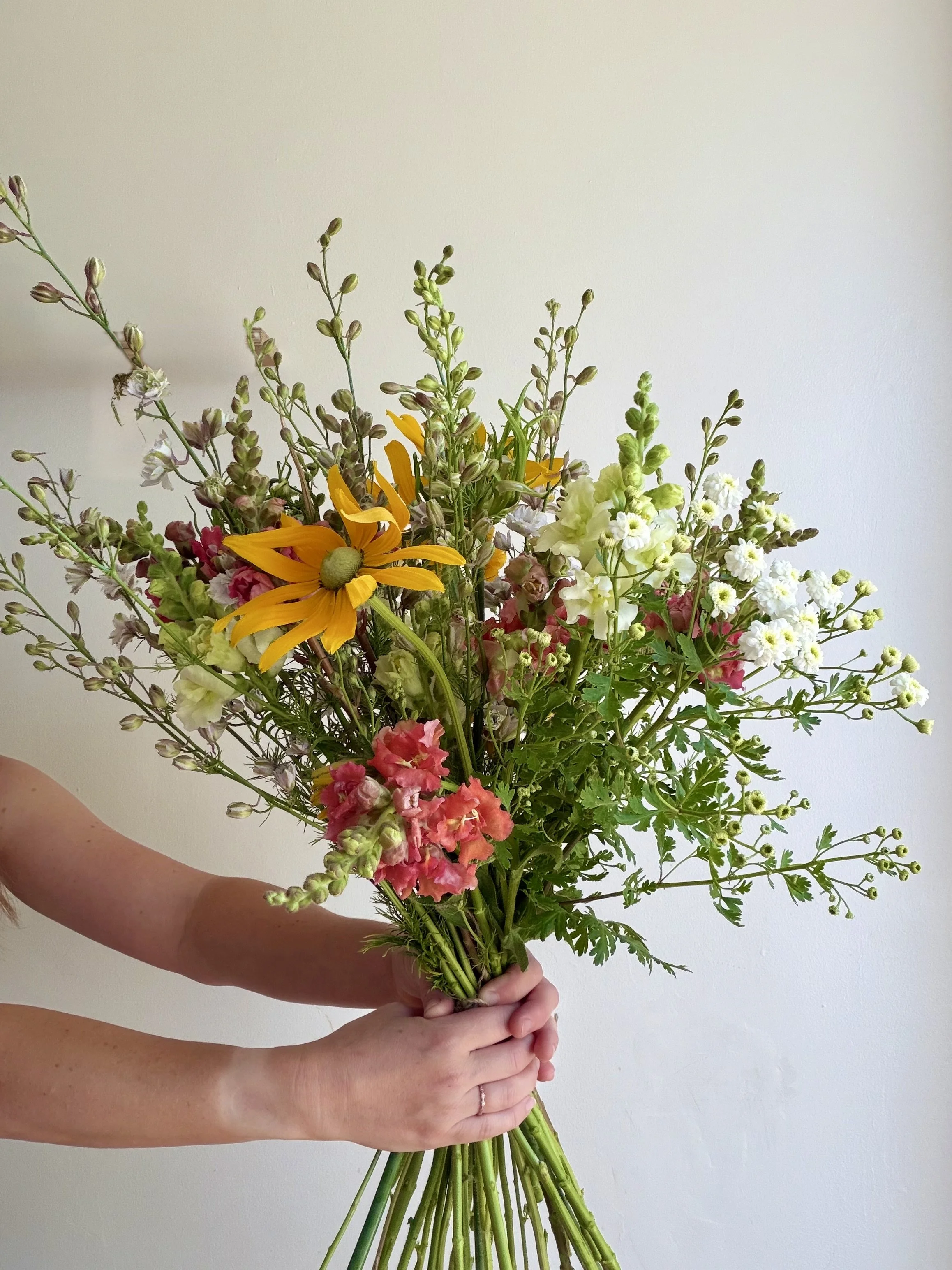
Every flower has its own personality
One of my favourite parts of growing hundreds of different varieties is seeing how differently they respond to the seasons.
Some flowers seem completely unfazed by soaring temperatures, happily producing stem after stem regardless of the forecast.
Others prefer cooler conditions and quickly let you know when they're not impressed.
Every season teaches me something new.
I make notes about which flowers seem to thrive during hot weather and which struggle. Some varieties continue producing beautiful stems almost regardless of the temperature, while others slow down or finish flowering much earlier than expected.
Those observations influence what I'll grow in future years. As our climate changes, choosing resilient varieties is becoming just as important as choosing beautiful ones.
Flower farming is a constant process of learning.
Sometimes flowers don't wait
One thing that surprised me during the heatwave was just how quickly some flowers developed.
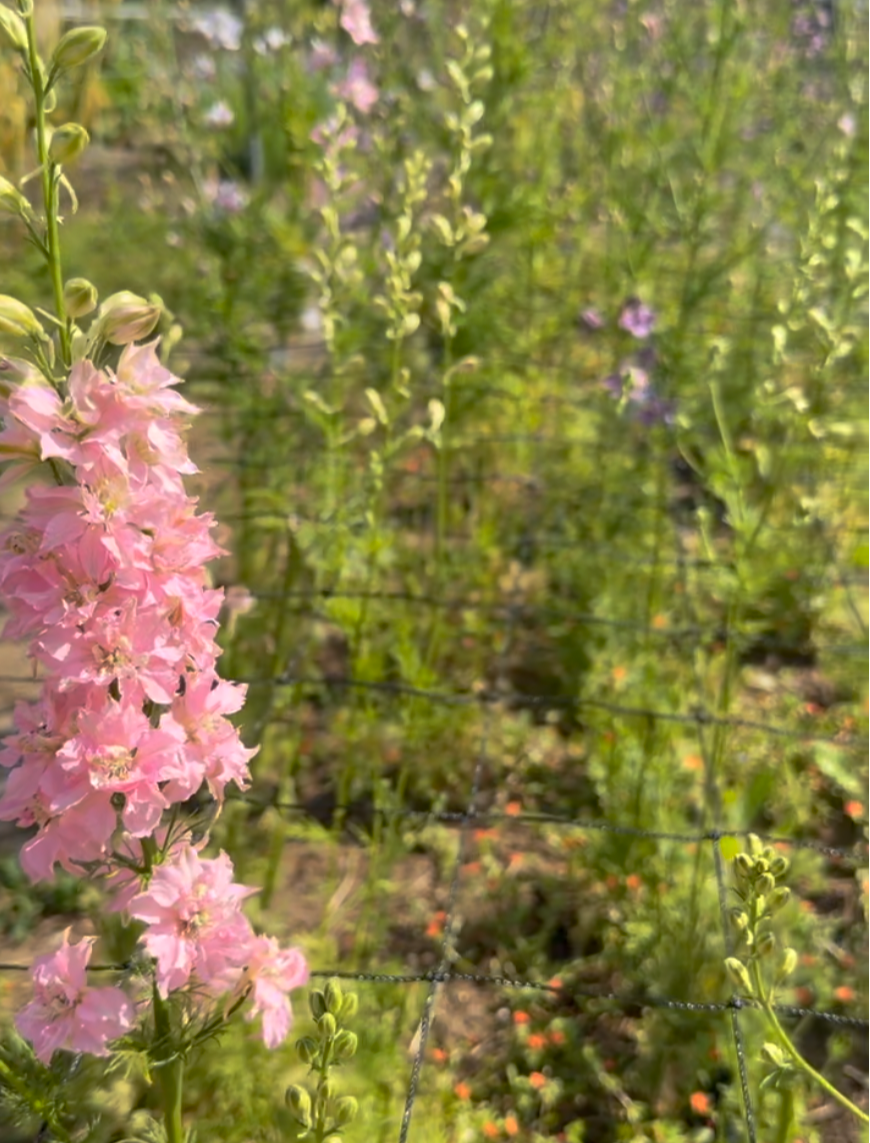
Take my larkspur, for example.
I have around 160 larkspur plants growing across two beds, and under normal conditions they flower gradually over a number of weeks, giving me a lovely steady supply of stems to harvest.
This year, the heat had other ideas.
Almost the entire crop decided to bloom at once, and much more quickly than usual.
That might sound like a good thing, but for a flower farmer it actually creates quite a challenge.
Every flower has a perfect harvest stage, and for larkspur it's when just a few flowers on each stem have opened. At that point, the remaining buds gradually open over the following days in the vase, giving you the longest possible vase life.
Because the heat caused the flowers to develop so quickly, many of the stems had already opened too far by the time I came to harvest them. They were still beautiful, but I knew they wouldn't last as long in a vase as I'd want them to for my customers.
So I made the difficult decision not to sell them as fresh flowers.
Instead, I harvested almost the entire crop and hung it up to dry. Thankfully, larkspur dries beautifully, so although I won't be using those stems in fresh bouquets this summer, they'll still have a second life later in the year in dried arrangements and wreaths.
It's another reminder that flower farming is all about working with nature. Sometimes the weather changes your plans, and rather than fighting it, you simply find the best possible way to make use of what you've grown.
Keeping freshly cut flowers cool
One of the biggest challenges during a heatwave doesn't actually happen out in the flower field—it begins once the flowers have been picked.
Freshly cut flowers naturally last longer if they're kept cool. Lower temperatures slow down water loss and help the flowers stay fresh while they drink and recover after harvest.
Flower farmers call this conditioning—placing freshly cut flowers into clean water and giving them time to drink deeply and fully rehydrate before they're arranged.
Thankfully, this isn't usually something I have to worry about too much.
Because I grow every flower myself, I know exactly when each stem has been picked. That means the time from harvesting to arranging—and then getting the flowers into your hands—is usually less than 24 hours, and sometimes as little as 12 hours.
Up until now, I've managed perfectly well using buckets of cold water, adding ice when needed, and storing the flowers in the coolest room in my house with a fan gently circulating the air.
But when the temperature climbed to 35°C, I knew my usual methods simply weren't going to be enough.
Ideally, I needed a dedicated flower cooler or, at the very least, a portable air conditioning unit.
Unfortunately, I had neither.
Then I had a bit of a lightbulb moment.
I realised that if I plugged my electric car in, I could leave the air conditioning running continuously without worrying about draining the battery.
So that's exactly what I did.
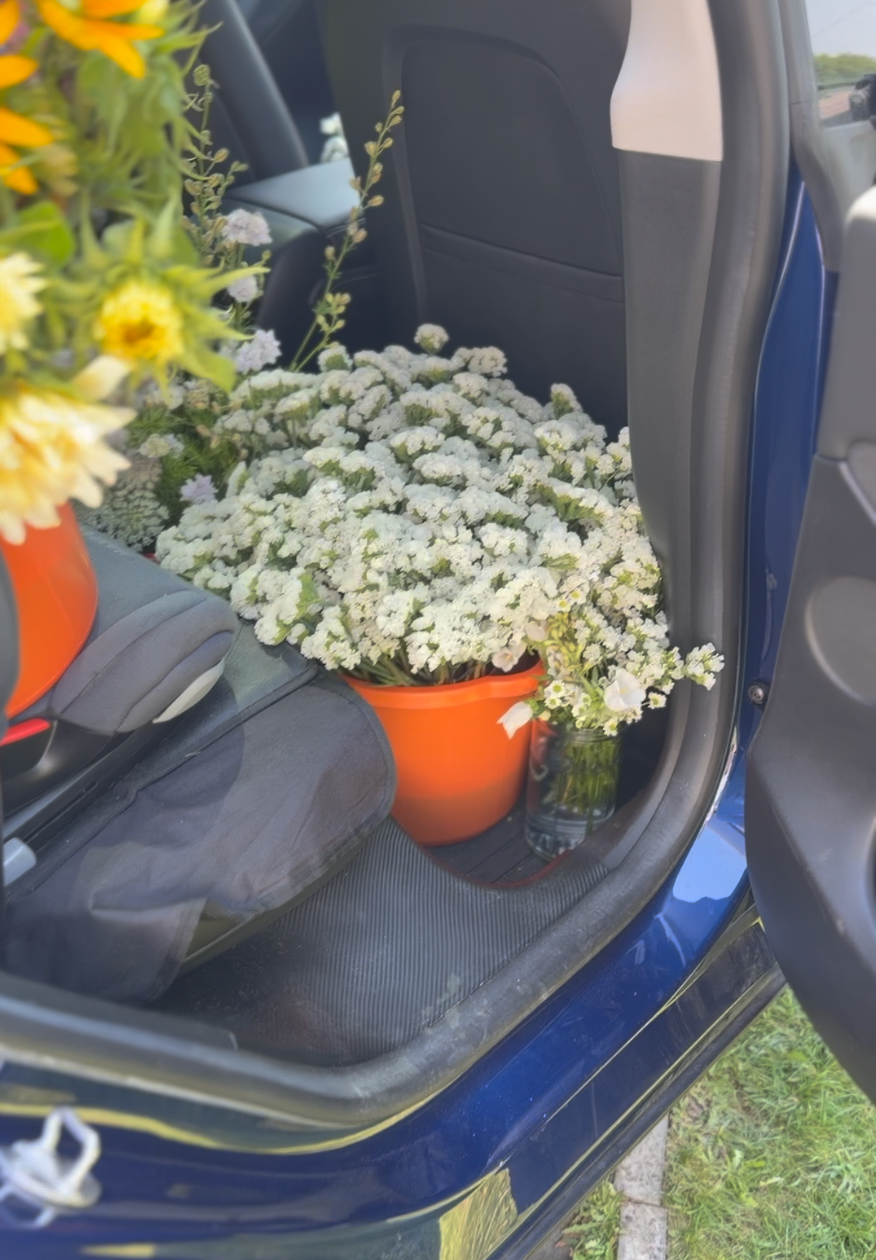
I filled the car with buckets of wedding flowers, set the climate control to between 11°C and 16°C, and transformed it into a temporary flower cooler. It was a far better environment for the flowers than sitting inside my house, where temperatures had climbed well above 35°C.
The flowers stayed in their makeshift cold room until almost midnight, when the outside temperature had finally fallen enough for me to begin arranging the wedding bouquets.
Growing flowers means solving problems you never imagined you'd have. I never thought I'd be turning my car into a flower cooler, but on that particular day it turned out to be exactly what the flowers needed.
There was one unexpected silver lining too. With wall-to-wall sunshine all day, my solar panels were generating plenty of electricity, meaning much of the energy needed to keep the car cool came directly from the sun itself.
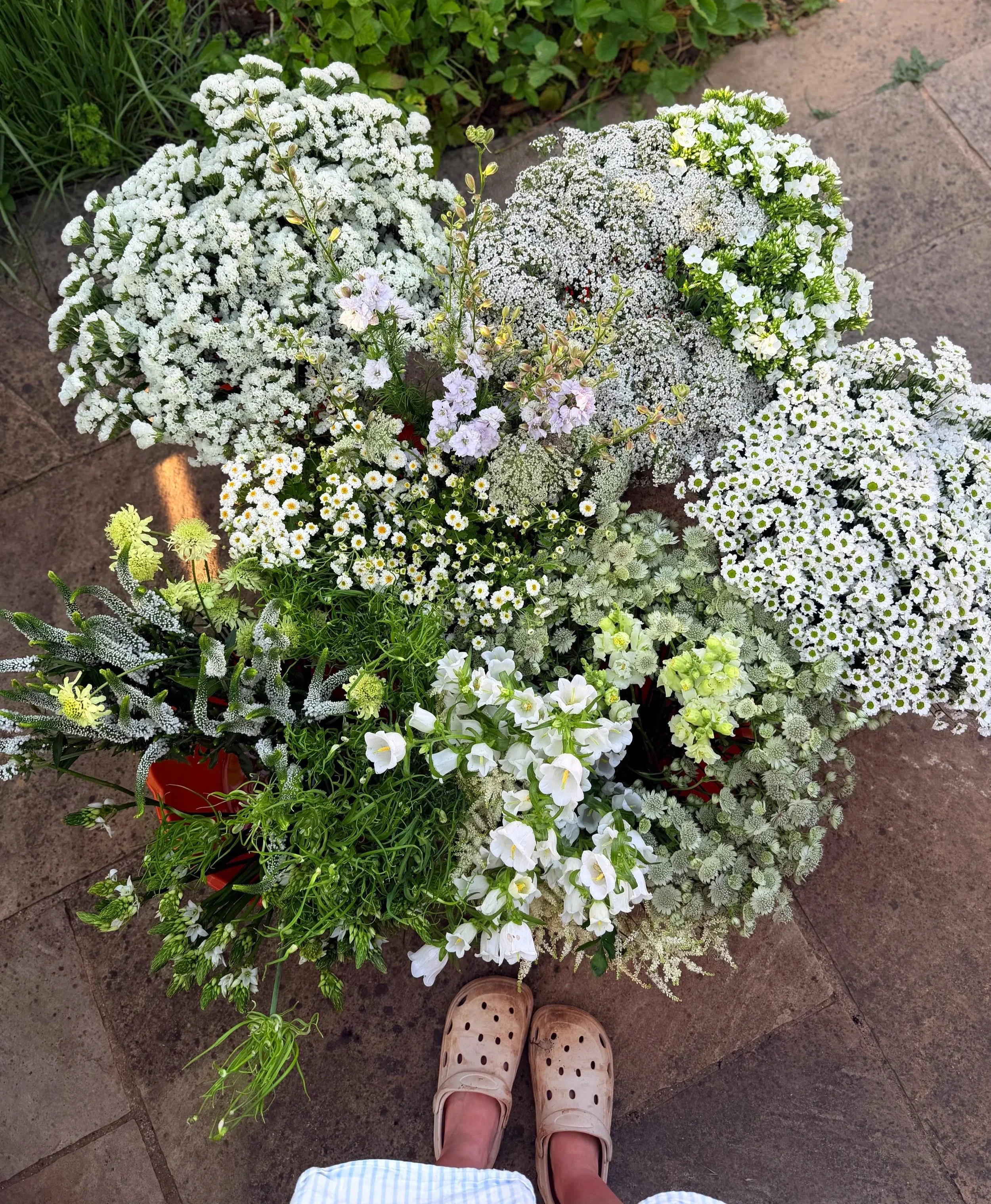
It might not be the conventional way to run a flower cooler, but it worked perfectly. The flowers stayed beautifully cool, had plenty of time to fully rehydrate, and were ready for me to arrange into beautiful wedding bouquets later that evening.
Heatwaves change my whole routine
One thing I hadn't really anticipated was just how much a heatwave would change my working day.
Normally, my days have a fairly predictable rhythm. But during this particular week, everything revolved around the coolest hours of the day.
One evening I was still arranging wedding flowers until around 3 o'clock in the morning because it was simply too hot to begin any earlier. On another day, my alarm went off at 4am so I could water the flower plot before the sun became too intense. Once the watering was finished, I stayed to harvest flowers at first light while they were still cool and naturally full of water.
By the evening, I was back out on the plot again, checking the flowers, watering where needed and preparing for the next day.
There wasn't much sleep that week. Most nights I was surviving on around four hours before doing it all again.
To make things even more interesting, my two children were at home because their school had closed during the heatwave, so I was trying to juggle running the flower plot while keeping them entertained too.
Thankfully, weeks like this don't happen very often. Growing seasonal flowers is wonderfully seasonal, and I know I'll more than make up for the lack of sleep during the quieter winter months with a few well-earned lie-ins and early nights.
Besides, I genuinely can't imagine doing anything else. Even when I'm tired, I still find myself smiling as I walk through the flower plot each morning. I feel incredibly lucky that this is what I get to call my job.
Knowing that the flowers I'm picking will become part of someone's home, a birthday celebration or one of the most important days of their life makes every early alarm, late night and unexpected challenge completely worthwhile.
Lessons I'll be taking into the next heatwave
One of the things I love about growing flowers is that every season teaches me something new.
No two years are ever the same, and every challenge helps me become a better grower. This heatwave certainly gave me plenty to think about, and there are already a few ideas I'll be taking forward into future summers.
A dedicated flower cooler.
Continuing to improve the soil.
Refining my drip irrigation system even further.
Experimenting with temporary shade for some of the more delicate flowers.
Growing even more varieties that naturally thrive in hotter weather.
Accepting that flexibility is simply part of growing seasonal flowers.
Every year brings new lessons, and every lesson helps make the flower plot a little more resilient.
Looking ahead
Heatwaves are likely to become something flower growers have to think about more often in the years ahead.
Fortunately, nature is remarkably adaptable, and so are growers.
Every season I learn something new that helps make the flower plot stronger, healthier and more resilient for the future.
Because at the end of the day, despite the early mornings, muddy boots, watering schedules and ever-changing weather forecasts, there's still nothing quite like walking through the flower plot at sunrise and seeing hundreds of beautiful stems ready to become someone's bouquet.
And I wouldn't swap it for the world.