
Why I Use Soil Blocks on the Flower Farm
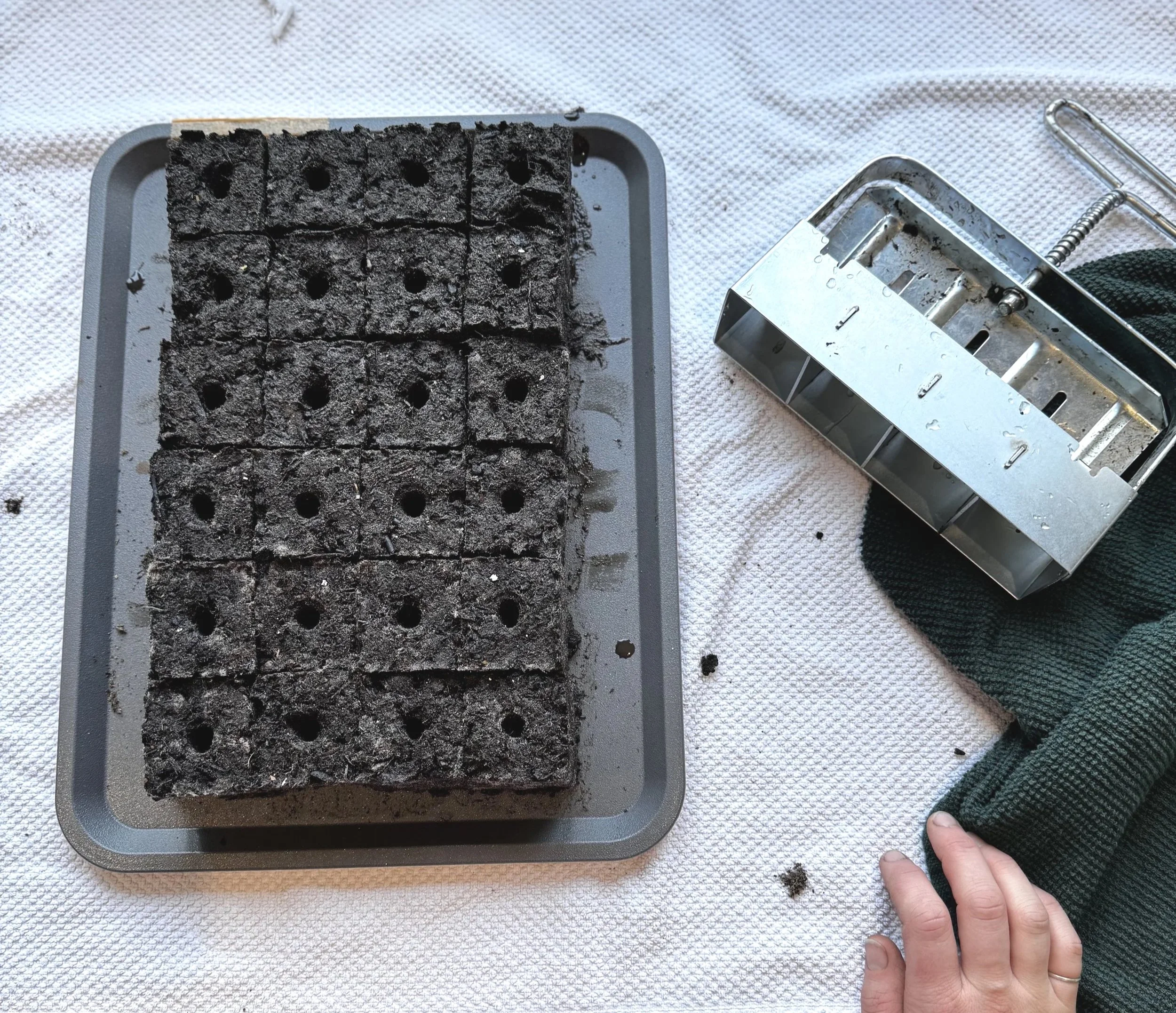
Soil blocking is a way of growing seedlings without plastic pots or trays. Instead of sowing seeds into containers, seeds are sown into small, free-standing blocks of compost that hold together on their own. The blocks sit closely together on ridged plastic trays - these are sturdy, reusable, and easy to clean (even in the dishwasher — don’t tell my husband!). Once seedlings are ready, the blocks are planted directly into the ground.
It’s a method that’s been used for decades, but it’s still fairly unfamiliar to many gardeners and flower buyers. On my small flower farm, it’s become an important part of how I grow - not because it’s trendy or the quickest option, but because it fits with how and why I farm.
On a small flower farm, every decision has a knock-on effect - from how much space I use, to how much plastic I rely on, to how my plants begin their lives. One of the choices that shapes my growing season from the very start is soil blocking.
Choosing the Right Soil for Soil Blocks
Not all compost works well for soil blocks. Standard seed sowing compost from the garden centre doesn’t hold together properly, and even worse, it often contains just 3–4 weeks’ worth of feed. That’s fine for seeds that will be potted on quickly, but my seedlings stay in these blocks for 6–8 weeks before being planted out in their final positions - far longer than most commercial compost is designed to support.
I’ve also never been comfortable with the mystery of “the feed” included in bought compost. What exactly is it? How does it behave over time? For seedlings I care about, I want to know exactly what they’re growing in.
Instead, I make my own mix: coconut coir, worm castings, a sprinkle of mycorrhizal fungi, and sheeps wool. This combination gives the soil blocks the perfect texture, holds moisture well, and provides slow-release food for my seedlings over the weeks they are growing in their tiny 1cm cubes. It’s a mix that supports healthy roots and steady growth from the very first sprout to the moment the plant is planted in the flower plot.
Starting Seeds at Home
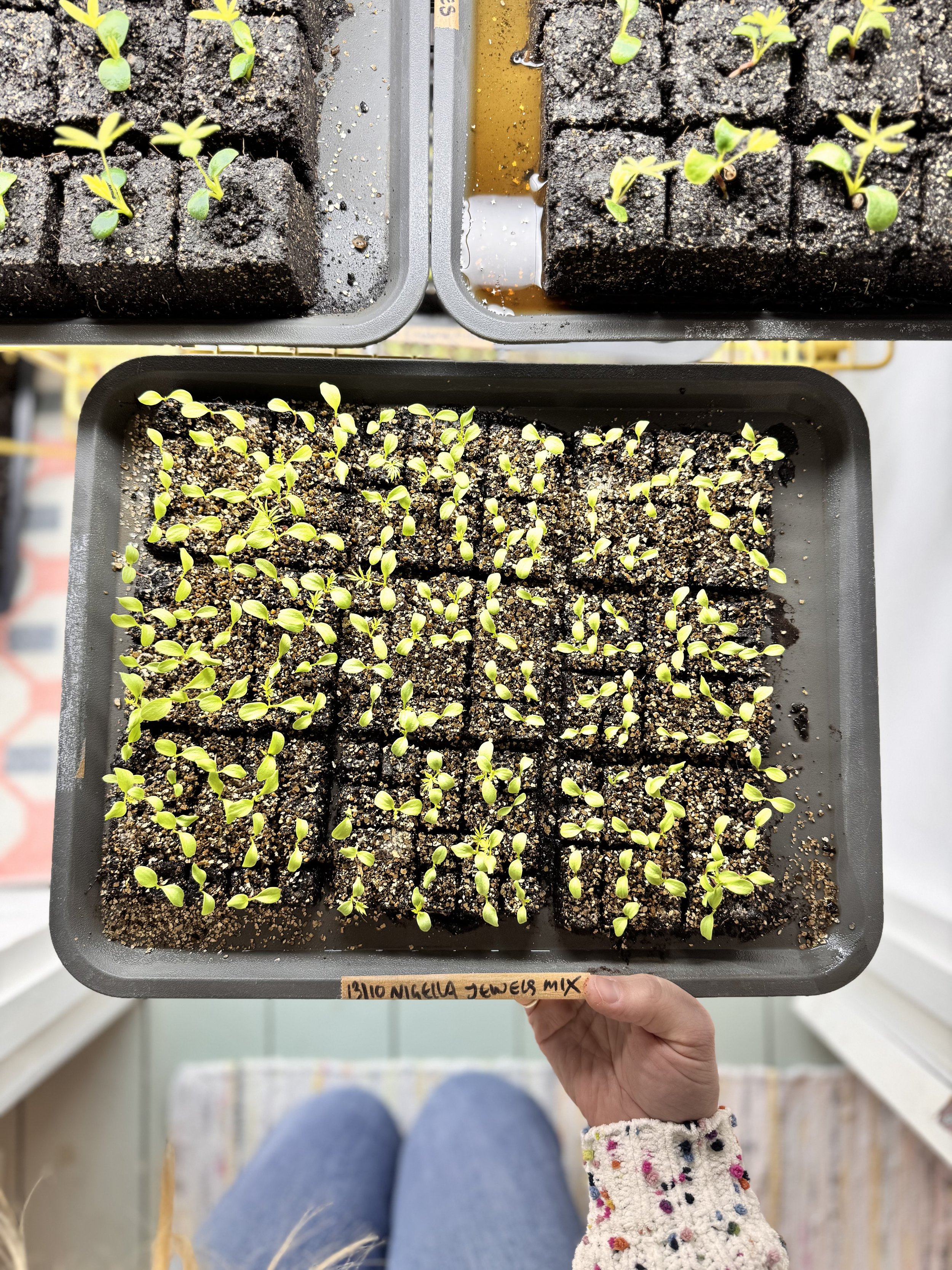
The growing season begins at home, long before anything reaches the flower plot. I start seeds in a cupboard set-up using grow lights and a dehumidifier, so I can control conditions carefully. Rather than using a plastic humidity dome, I cover the blocks with a piece of fabric - thin cotton or burlap, similar to an old coffee sack. It keeps the moisture in but is gentle on the tiny seedlings, as long as I remove it as soon as the first signs of germination appear.
Each tray is labelled with the same compostable tape I use for my bouquets, so I always know what’s growing where.
Moving Slowly, One Step at a Time
Once seedlings are established, they’re moved to a cold frame in my garden, where I can continue to keep a close eye on them while exposing them to cooler temperatures and natural light. From there, they move into a low tunnel at the flower plot to acclimatise before being planted out in their final position.
It’s a slower approach, but it means plants experience less shock and settle in more confidently once they’re in the ground.
Saving Space (Especially Early in the Season)
Space is always at a premium, particularly in early spring when everything seems to need protection at once. Soil blocks allow me to grow a large number of seedlings in a surprisingly small area. Because the blocks sit closely together on ridged trays, I can fit more plants into the same space - whether that’s under lights, in the cold frame, or in the tunnel. For a small, one-woman flower farm, that efficiency really matters.
Growing Without Plastic
Even though I use the same reusable trays season after season, the system still avoids single-use plastic. Once seedlings are ready, they’re planted straight into the ground - block and all - with nothing to dispose of afterwards. Small choices like this add up over the course of a year.
Healthier Roots, Without Constant Potting On
Soil blocks naturally air-prune roots. When roots reach the edge of the block, they stop growing outward rather than circling, encouraging a strong, balanced root system. Because of this, many plants don’t need to be moved up into larger blocks or pots. They can grow continuously in their original tiny 1cm cube right up until they’re planted out into their final position.
A Slower, More Intentional Way to Grow
Soil blocking suits the pace of my farm. It’s hands-on, sometimes messy, and definitely not about speed or shortcuts. But it reflects how I want to grow: thoughtfully, with minimal waste, and with care taken right from the very first seed.
Long before there are flowers to pick, this is where the season begins.
Cicely Flowers is a small, seasonal flower farm in Bradford on Avon, near Bath. Alicia grows flowers for weddings, picked-to-order bouquets, subscription deliveries, and a self-serve flower stand, all with a focus on locally grown, seasonal blooms.